Beauvoir’s Notions of Freedom
Simone de Beauvoir’s notions of freedom and ambiguity are intimately related and she believes that human nature consists of an ambiguous duality. In human life, there is a constant struggle of traversing from facticity to transcendence, from what you are to what you want to or can be…from existence to essence. You are concurrently, and ambiguously, what you are and also what you can be at the same time. You are what you are and you are what you are not yet. Our facticity is the facts that are true about us and our transcendence represents the possibilities that we have at our disposal. Freedom can be defined as the ability to achieve this transcendence, to not only accept the ambiguity of life but to relish it. Sartre may say that man is condemned to this freedom and as such, freedom is not a readymade value; it is the cause of itself. “Freedom is the source from which all significations and all values spring. It is the original condition of all justification of existence.” [i] Freedom is not a thing, or a natural quality attached to a thing, “it merges with the very movement of this ambiguous reality which is called existence and which only is only by making itself to be.” [ii]
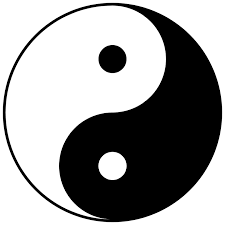
Freedom can be defined by the ambiguous nature of human existence. This ambiguous duality is represented by the relationships between being a unique subject in a universe of objects, an individual self among members of a larger social group. This experience of being a sovereign and unique subject amidst a universe of objects is what all human beings share. Concurrently, he is also an object for others, an individual within the collectivity on which he depends upon for his own definition, an ambiguity of human existence. There is a perpetual tension between asserting ones freedom as an individual and being a member of society. To be a human is to be all of these things simultaneously and recognizing this ambiguity creates a state of tension. This state of tension, this state of ambiguity, is a constant feeling of a lack of something and a constant striving to fill that lack. Is it possible to embrace this ambiguity? Can we find a balance in this state of ambiguity? It seems that one must strive to reduce one side of this duality in order to find some rationalization to make like less ambiguous .
Philosophy and religion historically try to make things less ambiguous by either deemphasizing individual desires or vice versa…placing a priority on serving yourself, on serving a cause, or on serving something bigger…with a purpose of finding some form of rationalization to reduce one side of these dualities to make everything less ambiguous, simplifying what we are to a citizen of a sovereign nation, a Christian, a Republican, a black man or some other identifying label.
Freedom does not mean being able to do anything you like, freedom refers to the freedom, the ability for transcendence, the power to move from facticity to transcendence. “Freedom realizes itself only be engaging itself in the world.” [iii] For you to be free, you must will others to be free to also transcend their own facticity. A crucial concept of the exercise of freedom is maximizing the freedom of others, as we can never be absolutely free unless others around us are free to pursue their own transcendence. This seems paradoxical since in willing (fighting for) others to be free, you must sometimes oppress the freedom of the so called oppressor and that seems a subjective moral decision. The assertions that “they know themselves to be the supreme end to which all action should be subordinated, but the exigencies of action force them to treat one another as instruments or obstacles, as means” [iv] and “we are obliged to destroy not only the oppressor but also those who serve him, whether they do so out of ignorance or out of constraint ” and “one finds himself obliged to oppress and kill men who are pursuing goals whose validity one acknowledges himself” [v] seems similar to Schopenhauer’s view that each will to life inevitably conflicts with others will to life which is the root of all suffering.
I would disagree that Beauvoir unequivocally submits that freedom is abstract. She in fact states that “this will is not an abstract formula. It points out to each person concrete action to be achieved.” [vi] Each individual can provide concrete goals in which to exercise his freedom. “Thus, the constructive qualities of man take on a valid meaning only when they are assumed as a movement toward freedom”[vii] However freedom is abstract in the sense that “the thing that matters to the serious man is not so much the nature of the object which he prefers to himself, but rather the fact of being able to lose himself in it.” [viii] It is not the specific goal but the process, the journey, the striving towards something is the most important, similar to Victor Frankl’s quote about if you can find a why to live, you can bear almost any how to live.
A child can escape the anguish perpetuated by this freedom and remain in a state of security by virtue of their insignificance. Many adults similarly keep themselves ‘safe and secure’ by engaging in the bad faith of ignoring the facts that are true about themselves or ignoring the possibilities available to them, existing either willingly or unwillingly in an infantile world of servitude and ignorance, where they have no desire to break through the ceiling established for them or in some cases by themselves. They can only exercise their freedom within the constraints or boundaries of their virtual prisons. If these virtual prisons allow one to escape the anguish and ambiguity of existence, are they possibly a viable safe alternative for some? Ironically making this choice not to be free is in itself an exercise of freedom, as choosing to deny reality, choosing to accept bad faith, is still however a choice.
Beauvoir believes that individual freedoms and our relationships with time and other people are inextricably related as “to will oneself free is also to will others free.” [ix] She submits that “freedom realizes itself only by engaging itself in the world.” [x] and that “only the freedom of others keeps each one of us from hardening in the absurdity of facticity.” [xi]
Beauvoir’s views are similar to Sartre in that it is by ambiguity that Sartre “fundamentally defined man, that being whose being is not to be, that subjectivity which realizes itself only as a presence in the world, that engaged freedom, that surging of the for-oneself which is immediately given for others.”[xii] Beauvoir similarly agrees with Sartre in that “Sartre declares that every man is free, that there is no way of his not being free.”[xiii]
Human spontaneity always projects itself towards something and that something is freedom. Man is motivated by the anguish he experiences on the face ambiguity, of freedom. Freedom is the act of surpassing ones giving facticity and transcending to whatever one dreams is possible for them. We are constantly creating and re-create ourselves in each passing moment, each second changes us in some way, we all exist on this state of tension, of ambiguity, of an ongoing struggle between the dualities of facticity and transcendence. This struggle is stated succinctly in the quote from Montaigne in first line of her book, “the continuous work of our life is to build death.”
Bibliography
[i] Simone de Beauvoir, The Ethics of Ambiguity (New York: Open Road Integrated Media, 1947), 23.
[ii] Ibid.,24.
[iii] Ibid.,84.
[iv] Ibid.,7.
[v] Ibid.,106.
[vi] Ibid.,78.
[vii] Ibid.,86.
[viii] Ibid.,50.
[ix] Ibid.,78.
[x] Ibid.,84.
[xi] Ibid.,77.
[xii] Ibid.,8.
[xiii] Ibid.,24.