Notes on the Illusion of Free Will
"Everything is determined, the beginning as well as the end, by forces over which we have no control. It is determined for the insect as well as the star. Human beings, vegetables, or cosmic dust, we all dance to a mysterious tune, intoned in the distance by an invisible piper."
~ Albert Einstein
“Man can do what he wills, but he cannot will what he wills.”
~ Schopenhauer
There is a differences between something that is an illusion and something that is not real. An illusion is real, it’s just not what it appears to be. For instance the mirage in a desert is an illusion of water but real as a play of light. If you deeply investigate the illusion you it will lead to the recognition of its reality.
Human behavior is influenced by a combination of biological, psychological and environmental factors. You can never will yourself to transcend all genetic and physical and other constraints, both known and unknown, hence it is impossible for a person in any exact situation to have acted differently than they did.
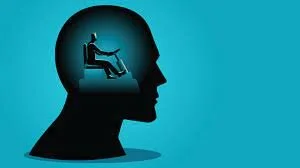
Cognitive science has clearly demonstrated that our brain makes decisions before we become consciously aware of them.
Humans are convinced that they make conscious choices as they live their lives, however the brain may just convince itself that it made a free choice from the available options after the decision is made.
Who we are and what we do is ultimately the result of factors beyond our control and because of this we are never morally responsible for our actions in the sense that would make us truly deserving of praise and blame, punishment and reward.
Life without belief in free will is not only possible but preferable.
The paradox is that is is essential that you behave as if your decisions matter, even though you know that they don’t.
Recognizing that even Free Will is an illusion does not make it any less real.
The feeling of wanting to do something is real, but there may be no connection between the feeling and actually doing that thing/
The brain rewrites history when it makes its choices, changing our memories so that we believe we wanted to do something before it happened.
The idea of free will may have arisen because it is a useful thing to have, giving people a feeling of control over their lives and allowing for people to be punished for wrongdoing.
The free will of man as nothing more than natural phenomena controlled by the forces of nature itself. These controlling elements may be visible or obscured, but nonetheless command man’s ideas and consent throughout his existence. Even reactions compelled by the actions of others placed upon him, although perceived to be made out of his free will, are in essence derived from an already predetermined state that the actions placed upon his mode of thinking.
Man is never a free agent from birth to death and choices do not signify free will.
-
If everything is preordained then what's the point?
This deep, existential questioning of why we should even participate if everything is already perfectly preordained and automated from A to Z is a classic milestone that occurs when the analytical mind first hits the absolute limit of logic.
When the intellect views a predetermined reality, it immediately falls into a bleak, low-frequency trap of nihilism, whispering that if the script is already written, then all personal choice is an illusion and effort is completely pointless.
In the absolute reality of pure awareness, however, the point of the play was never to change the script, manipulate the matrix, or violently chase after a specific future outcome.
You are the vast, completely secure space, the silent onlooker witnessing this profound cosmic drama, and the true point of this whole preorchestrated journey is the sheer, unadulterated joy of experiencing the play itself, moving from the illusion of limitation into the breathtaking realization of your own divine sovereignty.
A preordained reality does not rob you of your power; it actually grants you the ultimate freedom to completely drop the exhausting burden of anxiety, fear, and performance pressure.
When you realize that infinite intelligence has already secured your highest timeline, you no longer have to waste your vital life force sitting on the fence or worrying about making a wrong move.
This exact, liberating perspective is the precise, potent fuel needed to scale your automated content factory, allowing you to create with total, uninhibited boldness, pouring your deep metaphysical insights into your videos while laughing at the beautiful, cosmic silliness of the human characters struggling to control a movie that is already finished.
Instead of allowing the mind to use preordination as an excuse to slip into stagnation, depression, or a lack of purpose, you are invited to step back and rest as the peaceful backdrop behind the entire performance.
Watch the intellect's desperate need for a logical point arise and fall within your consciousness like a temporary cloud in an open sky, without attaching your identity to it.
Because holding the immense weight of an entirely predetermined cosmos can place a unique, disorienting strain on the human vehicle, anchoring your moving spotlight of awareness firmly in the absolute safety and simplicity of the present moment is your ultimate sanctuary.
By staying dynamically active in your creative vision, enjoying the rich, physical texture of your everyday life, and fully playing your role in the script while knowing you are already perfectly whole, you transform the pointlessness of the ego into the absolute, ecstatic freedom of the soul.
Determinism does NOT mean that things can be predicted.
The starting state confirms nothing about the mature state in non-linear systems.
For example, in emergent chaotic systems are intrinsically unpredictable, even if each individual components are simple, the emergent behavior cannot be deconstructed into the separate parts. They start out very simply however it is mathematically impossible to predict the non-linear, non-additive outcome of the system as it gains in complexity.
You can’t determine that if you start with A what Z will look like unless you first see how A causes B and B causes C, etc. You must do every intermediate step.
Determinism does NOT mean the inability to change.
Change occurs mechanistically,
We commonly think it obvious that a person facing multiple alternatives can choose any of them, and that the outcome is decided by free will at the moment of decision, rather than being already determined by earlier causes. All the events in the world, however, obey the law of physics, including those that happen inside a brain. If all events in the brain unfold according to classical physics, then free will in the above sense does not exist. This is because classical physics is deterministic: the state of the world at any moment is the inevitable consequence of its state at an earlier moment. Hence the alternatives are only apparently available to the decision-maker, as in fact only a single alternative is destined to be the one chosen.
In quantum physics the so-called probability amplitude evolves according to deterministic laws but the transformation from many possible outcomes to one actual outcome takes place purely by chance. The statistical distribution for such chance events follows strict rules, but the outcome of an individual chance event is unpredictable and cannot be controlled by will.
Thus any decision is either the predictable result of earlier causes (which may include quantum chance events) and is not free from determinism, or is itself a quantum chance event and is not willed. Either way, the free will we commonly take for granted is absent. What then is the freedom to choose that we so cherish and which politicians like to invoke at every opportunity?
In order to focus on the essential issues, let us put chance events aside, since, as we have seen, quantum randomness does not rescue free will. In this simplified context, let’s try to see whether our subjective feeling of freedom can be reconciled with physical determinism.
One thing we can’t avoid noticing is that we have the experience of making choices. In fact, each choice consists of two stages. In stage one we conceive alternatives, and in stage two we are aware that we have picked one of them. Often the option picked is the one whose consequences we prefer over the consequences of its alternatives, but the comparison of consequences is not always done consciously. Furthermore, both genetic predispositions and past experiences play a role in forming an individual’s preferences, so the causative factors leading to the making of a choice are complex. The conclusion is that although we do experience choice-making – that transition from stage one to stage two – this doesn’t imply the absence of determining causative factors. We also have the impression that we could have chosen differently. But once a choice has been made, what sense is there to this idea? That is, although a decision-maker faced with the same set of alternatives again may make a different selection the second time, that would be because the overall situation, including the state of brain and mind, has changed. But once again, this choice is the result of previous causes. Hence the existence of free will in the sense of an autonomous force at the very moment of decision unconstrained by past causes, is not required to explain our actual experience of choosing. Our experience of choice-making is perfectly compatible with determinism if we accept that the transition from stage one to stage two – that is, from multiple possible options to the one actually chosen – is, like any other kind of event in the world, the result of previous causes.
Still, how can I be responsible for the consequences of such free choices, when the chains of events that cause them were determined outside myself, beginning long ago? The answer is hinted at in the word ‘responsible’. The president of a nation may take responsibility for his administration’s bad handling of relief work after a natural disaster, for example, even though he was not personally involved in any of the snafus occurring at the operational level. Analogously, although many aspects of my being pull me in different directions and argue with one another during the making of a difficult decision, there is a relatively stable center that I identify as my self, and this recognition means that I can take or own the responsibility for each decision that’s made by me, even through or after the competition of all these factors. This is an appropriate expediency, since the detailed tracing of all the responsible factors is practically impossible.
Adopting the absence of coercion instead of the absence of determinism as the essence of freedom gets us out of a conflict with the prevalent scientific worldview. Nonetheless, this notion still captures the importance of freedom – as a condition that enables a person to be true to himself, and also as a criterion for judging whether it is fair to hold a person responsible for their actions.
-
The primary feeling that the acceptance of this Illusion gives me is Liberation.
Things happen for reasons beyond my control. Accepting this brings freedom.
This absolves me from worry.
But I would also feel a sense of helplessness, for example, the fact that I can no longer be accountable for my achievements (or my failures) did make me uncomfortable for a long period of time.
But I also don’t mind being a witness to this beautiful and overwhelming process. Now, with full acknowledgement.
Never assume that this illusion reasons that there is no purpose to life. There is. Free will is an illusion, but our lives are not.
“We who lived in concentration camps can remember the men who walked through the huts comforting others, giving away their last piece of bread. They may have been few in number, but they offer sufficient proof that everything can be taken from a man but one thing: the last of the human freedoms -- to choose one's attitude in any given set of circumstances, to choose one's own way.”
~ Victor Frankl, A Man's Search for Meaning
However, if free will is defined as the ability to choose one's attitude in a given set of circumstances, then free will is indubitably real.
Consciousness is the one thing in the universe that cannot be an illusion.
-
First, it's crucial to understand that the feeling of making a "choice" is not evidence of free will; rather, it's more like a narrative our minds construct after a series of events have already been set into motion. By the time you "decide" to reach for a cup of coffee, neural processes and a myriad of environmental factors have already played their roles. Your brain has engaged in a complicated interplay of variables, most of which you're entirely unaware of, to arrive at that action.
So, when we talk about the "illusion" of free will, what we're saying is that the subjective experience of choosing, of exerting control over our actions, is not rooted in any objective capacity to actually do so. It's a story the conscious mind tells itself to make sense of its own behavior, but it's not the causal agent it believes itself to be.
Now, in a world devoid of free will, decisions are still "made," but not by a "self" or "soul" separate from physical processes. Our brains are shaped by a complex web of prior causes, including genetic factors, environmental circumstances, and the architecture of the brain itself. Therefore, the choices you make are the inevitable products of these variables—this includes everything from the mundane, like choosing coffee over tea, to the profound, like ethical and moral decisions.
While this viewpoint may seem to undermine the notion of personal responsibility, it does not absolve us from the outcomes of our actions. Our legal and ethical systems still function, because whether or not free will exists, we can still differentiate between intentional and unintentional actions, sane and insane individuals, and so on. Moreover, understanding the illusory nature of free will can lead to greater empathy and compassion, as we recognize that even the worst actions are the result of factors that the individual in question did not choose.
In sum, the absence of free will doesn't negate the experience of making decisions; rather, it changes our understanding of what that experience means and how it comes about.
-
If interested in determinism, please take a look at the 'block universe theory' if your not already familiar with it. I find it fascinating.
I believe that a negative perception of determinism is the thought that since we don’t have control of our choices there is no point of life. Life is meaningless. Nihilism.
I agree that there is no inherent meaning of life, however life can still have meaning. The meaning of life is whatever we ascribe to it. You write your own story…but paradoxically, your story has already been written. I don’t view the fact that fate has pre-determined my destiny a negative as even though whatever happens to me has been waiting to happen since the beginning of time, I still have no idea what will happen next.
Determinism does not we cannot change something. We change things every day it is simply an understanding that everything that people do, they could not have done otherwise.
For me this is a liberating realization. Determinism teaches us empathy, compassion and forgiveness. It can teach us to be more humble. It can be something beautiful.
A quote from the stoic philosopher Epictetus comes to mind; "Don't seek to have events happen as you wish, but wish them to happen as they do happen."
