Heraclitus and Parmenides - Brief Compare and Contrast
This essay will provide a brief overview, comparison and contrast the metaphysical views of the presocratic philosophers, Heraclitus and Parmenides.
Heraclitus was an early six century BC Milesian philosopher. Influenced by the views of Anaximander and Anaximenes, his main idea is a form of monism, proposing that fire is the primordial element out of which all else has arisen, imagining “the whole cosmos as an eternal fire.” (Reeve, p. 9) In fact he refers to the conception of God as “simply fire by another name.” (Reeve, p. 9) Heraclitus submits that reality at its core, like fire, is inherently unstable, with all things in flux, and in a state of perpetual change and permanent transition.
Heraclitus illustrates this concept with the metaphor of a river, inferring that reality is like a river which retains its form yet is always moving and never staying the same, maintaining a state of constant flux. He espouses that it is not possible to step in the same river twice as though it is the same river, both the water and the man have changed. He shows, paradoxically, that which is undergoing constant change can be perceived as a static fixed concept, just as a river shows how continuous flux and movement can be perceived as something that is both stable and persistent.
The profound idea that there is nothing in the world that just permanently ‘is’ can be somewhat disconcerting to one that craves stability while at the same time it can be liberating as this metaphor also applies to concepts such as happiness, sadness, anger and suffering which are also temporary in nature. Remembering this can improve our lives by helping us remember not to become too attached to our thoughts.
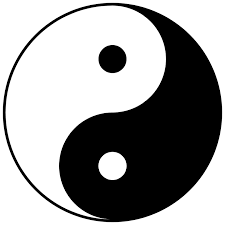
A core aspect of Heraclitus’ monistic theory is his idea of the unity of opposites. Separation is simply a matter of perspective as “the road up and down are one and the same.” (Reeve p. 10) Heraclitus describes the universe as “stasis in movement, harmony on opposition and creation in strife.” (Reeve, p. 9) Examples of this idea are a fire that exists by striving against its fuel and a bow which demonstrating how “the tensions of opposites can make something unified and harmonious.” (Reeve, p. 9) This concept seems similar to both the Taoist concept of yin yang as well as Georg Hegel’s dialectic theory of the synthetization of opposites.
Parmenides was an Eleatic philosopher and student of Xenophanes, who also lived in the 6th century BC. He similar adhered to a position of monism, whilst a different form that Heraclitus proposed. Parmenides submits that “all things are one,” (Reeve p. 12) that what appears as change and movement actually occurs in an enclosed and unchanging system. Instead of being in a state of flux, the universe is a single unchanging entity.
He proclaims that everything must have always existed and is thus eternal and unperishable, “that it is, and that it is not possible for it not to be.” (Reeve, p. 12) This implies that Parmenides supported the concept of determinism, that everything must be as it is, preceding Isaac Newton’s view of a mechanical universe by two thousand years.
A core view of Parmenides is the primacy of thought over the senses, as evidenced in his poem, “On Nature,” where he proclaims that the human senses are deceptive. The seeming multiplicity of things is an illusion with the only true reality being “the one” which is infinite and indivisible. Reality cannot a union of the opposites as Heraclitus claimed since Parmenides believes that there are no opposites!
In the development of their contrasting monistic theories, Heraclitus, representing the Milesian monism similar in form to his immediate predecessors, drew his inferences primarily from empirical observation while Parmenides developed an entirely new form of monism (possibly influenced by his teacher Xenophanes account of one supreme god) via a rejection of the physical senses and utilizing thought alone to deduce the unity of all that is.
They each expressed forms of metaphysical monism, albeit different flavors, with each believing that the universe is infinite and eternal. Parmenides positing that everything must have always existed thus reality is eternal and unperishable. Likewise, Heraclitus also believed that the universe is eternal, as evidenced by his statement that the cosmos “was always and is and shall be: an ever living fire.” (Reeve P. 11)
The difference being that Heraclitus’ version of the universe as fire is one that exists eternally in flux while Parmenides vision that “all things are one,” (Reeve p. 12) is eternally static and unchanging. In summary, Heraclitus proposed that everything changes while Parmenides suggested the exact opposite, that nothing changes.